Signs Your Roof Needs Repair (10 Warning Signs)
Cracked tiles, ceiling stains, sagging and heavy roof growth can signal different problems. Learn what to check safely and when to arrange an inspection.
Key Takeaways
- Visible tile or metal damage should be checked from the ground
- Ceiling stains can appear away from the actual water-entry point
- A sagging roof line needs prompt assessment and should not be accessed
- Inspection timing should reflect roof age, condition, exposure and recent weather
Roof problems often show themselves as a change: a tile has moved, a ceiling stain appears after rain or a section of ridge capping looks different from the rest. Recognising those signs helps you arrange the right inspection before guessing at a repair.
These are common warning signs on Sydney roofs and what the next step may involve.
1. Cracked, Broken or Missing Tiles
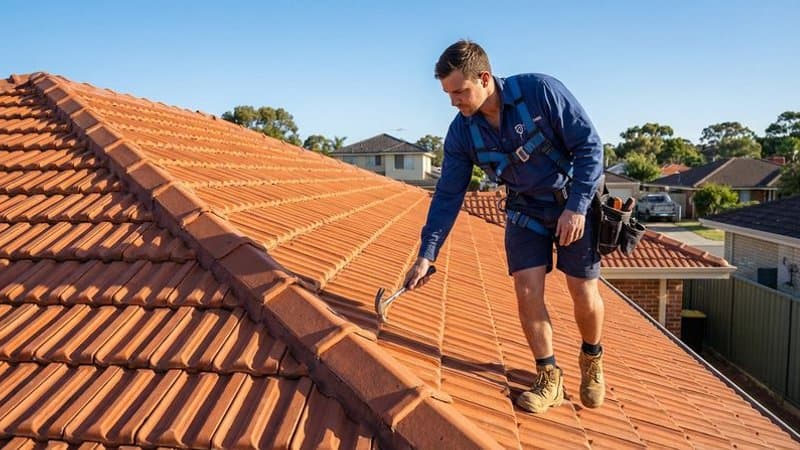
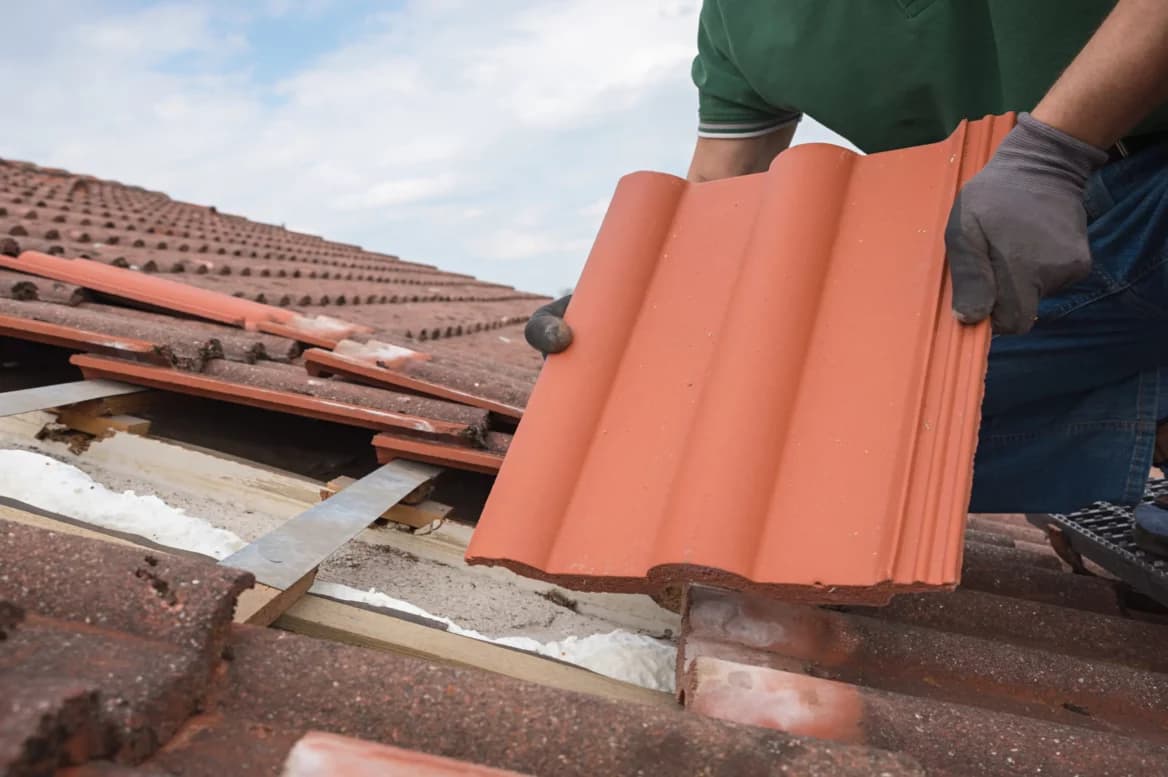
Cracked, displaced or missing tiles can create a path for water, particularly near a valley, ridge or flashing. Check from the ground and avoid climbing onto the roof for a closer look.
A limited area may only need a roof repair. Widespread tile, pointing and coating problems may justify assessing roof restoration.
2. Ceiling Stains or Water Marks
Brown or yellow ceiling stains can indicate current or previous water entry. The source may sit some distance away because water can travel along beams, battens, insulation and flashing before becoming visible.
Record when the stain changes and the weather at the time. Paid roof leak detection can use physical inspection, moisture tracing and thermal imaging where useful to identify the likely entry point.
3. A Sagging Roof Line
A roof line that has visibly changed can indicate movement, damaged framing or long-term moisture. Do not access the area. Arrange a roof inspection and seek any additional structural advice recommended after the first assessment.
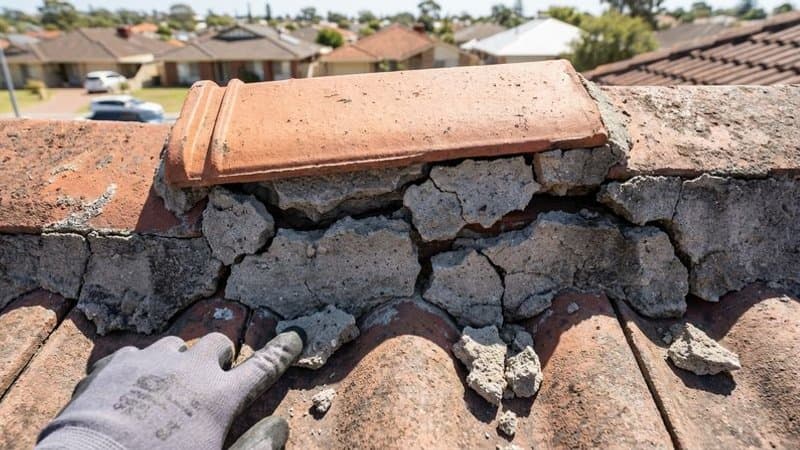
4. Loose or Deteriorated Ridge Capping
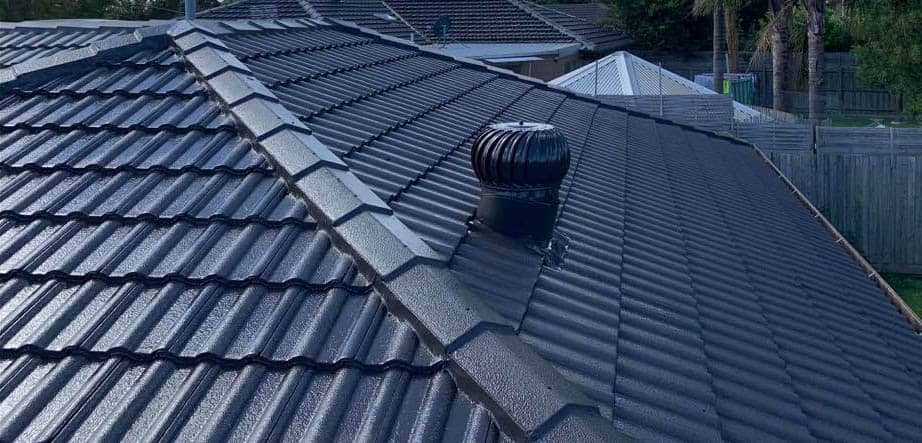
Cracked pointing, loose caps and deteriorated bedding can affect the joints along ridges and hips. A roofer can check whether the section needs repointing, rebedding or another repair.
5. Rust on Metal Roofing or Flashing
Look for corrosion around fasteners, seams, cut edges and flashing. Surface corrosion can progress into holes or affect surrounding joins. The repair depends on how far it has spread and whether the existing coating and metal remain serviceable.
6. Moss, Lichen or Algae Buildup
Heavy growth can hold moisture and collect around tile laps, valleys and gutters. It may also hide cracked tiles, failed coatings or loose pointing.
Roof cleaning should use a method chosen for the roof material and surface condition. Any repairs found during cleaning should be shown and quoted separately.
7. Daylight Visible from the Roof Space
Daylight visible from a safely accessible roof space can indicate a gap, displaced material or an opening around a penetration. Not every point of light becomes a leak, but it warrants inspection.
Only enter a roof space when access is safe and clear of electrical or structural hazards. Record the location rather than touching damaged roofing from inside.
8. Indoor Temperature Changes
Changes in indoor temperature or energy use can have many causes, including insulation, ventilation, gaps and heating or cooling equipment. A roof inspection may identify visible sarking or ventilation defects, but broader energy concerns can require another specialist.
9. Overflowing Gutters or Debris
Overflow can send water onto fascia, walls and areas below. Mortar pieces, metal fragments or tile residue in the gutter can also be a sign that another roof component needs attention.
Check drainage after severe weather and whenever overflow becomes visible. Use a suitable contractor when gutter access cannot be maintained safely from the ground.
10. Recurring Problems Across an Ageing Roof
Age alone does not mean a roof needs restoration or replacement. Repeated leaks, widespread failed pointing, corrosion, brittle materials or patching across several areas are more useful reasons to arrange an inspection.
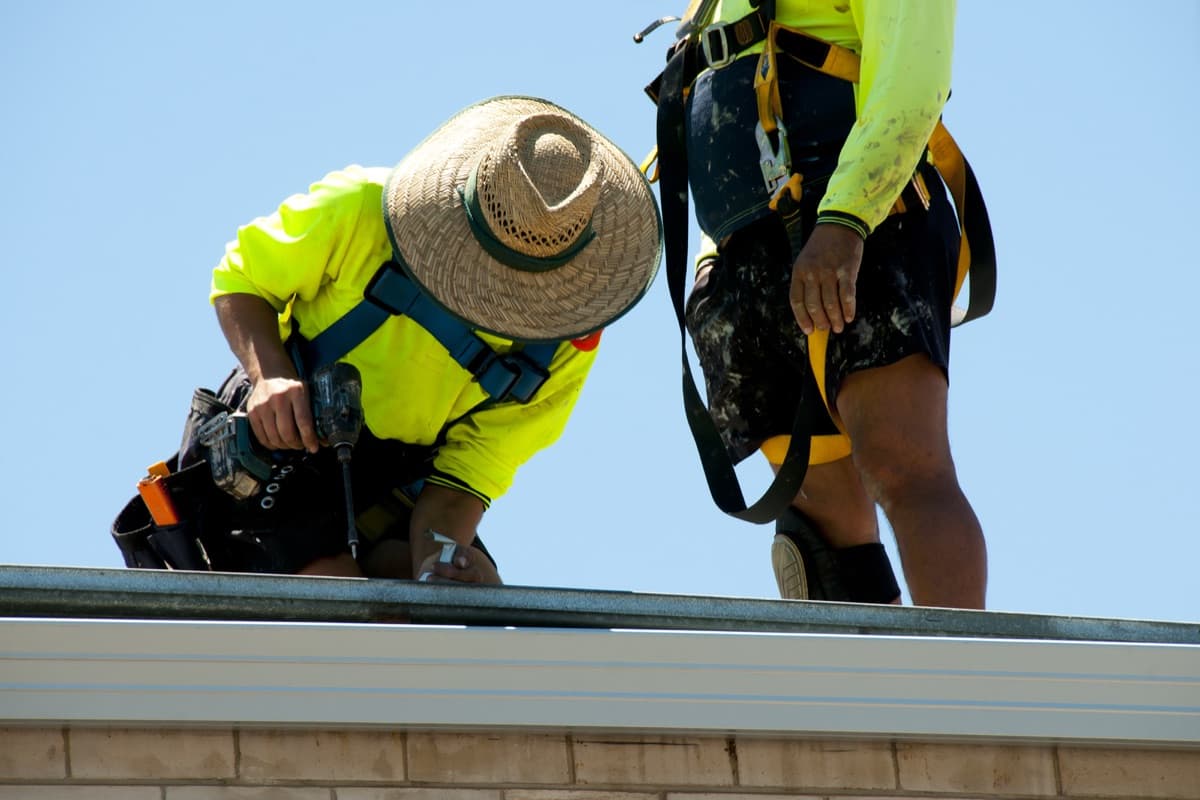
Inspection timing should reflect roof material, condition, exposure, recent storms and known defects. A paid roof inspection can document what needs attention now and what can be planned.
Repair, Restore or Investigate Further?
| Situation | Possible next step |
|---|---|
| A limited number of cracked tiles or local flashing damage | Roof repair |
| Broad cleaning, pointing, repair and coating needs | Roof restoration |
| A stain with no clear external cause | Roof leak detection |
| Widespread movement, decay or structural concern | Roof inspection followed by any specialist advice required |
The right choice depends on how much of the existing roof can remain serviceable. A free roofing quote can define repair or restoration work; leak detection and documented inspections are paid services.
What to Do Next
Send the suburb, what you noticed and any safe ground-level photos. We will explain whether the next step is a free roofing quote, paid leak detection or a paid roof inspection.
Call 0451 456 101 or send a roofing enquiry.

I Care Roofing
I Care Roofing Team
Our team has 20+ years of hands-on roofing experience across Sydney.
Contact Us